A Sense of Stillness
JOANNE LAWS SPEAKS TO JOHN HUTCHINSON ABOUT HIS 25-YEAR DIRECTORSHIP OF THE DOUGLAS HYDE GALLERY.
Shrouding to Make Visible
In showcasing Ailbhe Ní Bhriain’s current solo exhibition, The Dock’s bright and expansive gallery spaces have been dramatically transformed into dark cinematic chambers. Black wall-mounted curtains lend an insulating quality to these newly immersive settings where Ní Bhriain’s captivating moving image works are slickly presented. The artist is best-known for her multiscreen films which combine computer-generated imagery and video montage techniques. Her wider practice explores notions of representation and displacement, and the works shown in this exhibition portray deep interrogations of place. Though some of the films appear deceptively slow-paced, muted and even minimal, they function as portals into vast and complex territories. On multiple visits to the gallery I grappled with this complexity, negotiating ways to position myself as a viewer and calling upon cultural and art historical references to anchor my encounters.
PDF From the Margins of History
From the Margins of History
JOANNE LAWS REPORTS ON THE ‘RADICAL ACTIONS’ SEMINAR, HELD AT KING HOUSE, BOYLE ON 2 DECEMBER 2016.
‘Radical Actions’ was an ambitious, three-part international project curated by Linda Shevlin, curator-in-residence at Roscommon Arts Centre. The first phase was an exhibition in RMIT Gallery, Melbourne, in September 2016, that formed part of Culture Ireland’s commemorative programme, I Am Ireland, aimed at highlighting the centrality of the arts to the evolution of Irish identity over the hundred years since the 1916 Rising. The exhibition featured the work of Duncan Campbell, Jesse Jones, Seamus Nolan and the collaborative duo Kennedy Browne – Irish artists perceived as identifying with the “politics of social agitation, revolution and rebellion” by engaging with non-idealised versions of Ireland’s past.
A Lived Activity, Not an Abstract Pastime
It’s Very New School seeks to address what curator Jennie Guy calls a ‘crisis’ in post-primary education. Using the stagnation of the Leaving Certificate Art curriculum and other perceived educational deficiencies as points of departure, It’s Very New School asserts an important role for contemporary artists in society. Whether as a site of research-based and experiential learning, or as a vehicle to promote criticality and questioning, contemporary art has the inherent capacity for philosophical inquiry and imagining alternative realities. It’s Very New School has found vibrant ways to transpose these assertions into the gallery setting. Read more…
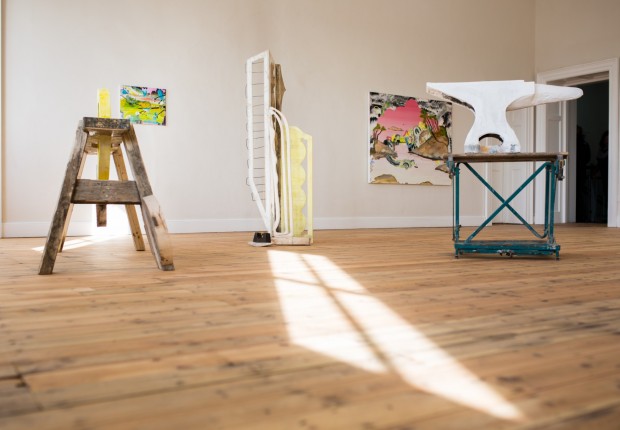
The expansive windows of Gallery One have been blacked out with long, dark curtains. Spot-lighting of individual artworks further conspires to create a theatrical atmosphere. Despite the fact that Helen Hughes specifically describes her work as ultra-modern and largely unconcerned with history, it is difficult to read her artworks explicitly in this way. For me, they inhabit a much more ambiguous timeframe. A Bold Complement (2017) is a long and flowing swathe of acrid green cellophane which glistens in the dimly-lit alcove. It could easily be admired for its ultra-modern, tactile plasticity, in the way one might marvel at shrink-wrapped meat, in all its compressed, synthetic glory. Yet something about the encounter calls to mind medieval silk cloaks, pagan shrouds or some other garment retaining the history of its own performance. At the side of the arch, non-descript sculptural bundles hang ominously, like the superstitious Irish piseogs, frequently tacked to doors and land boundaries to ward against misfortune.
 PDF (1) – Alistair Hudson Interview
PDF (2) – Alistair Hudson Interview
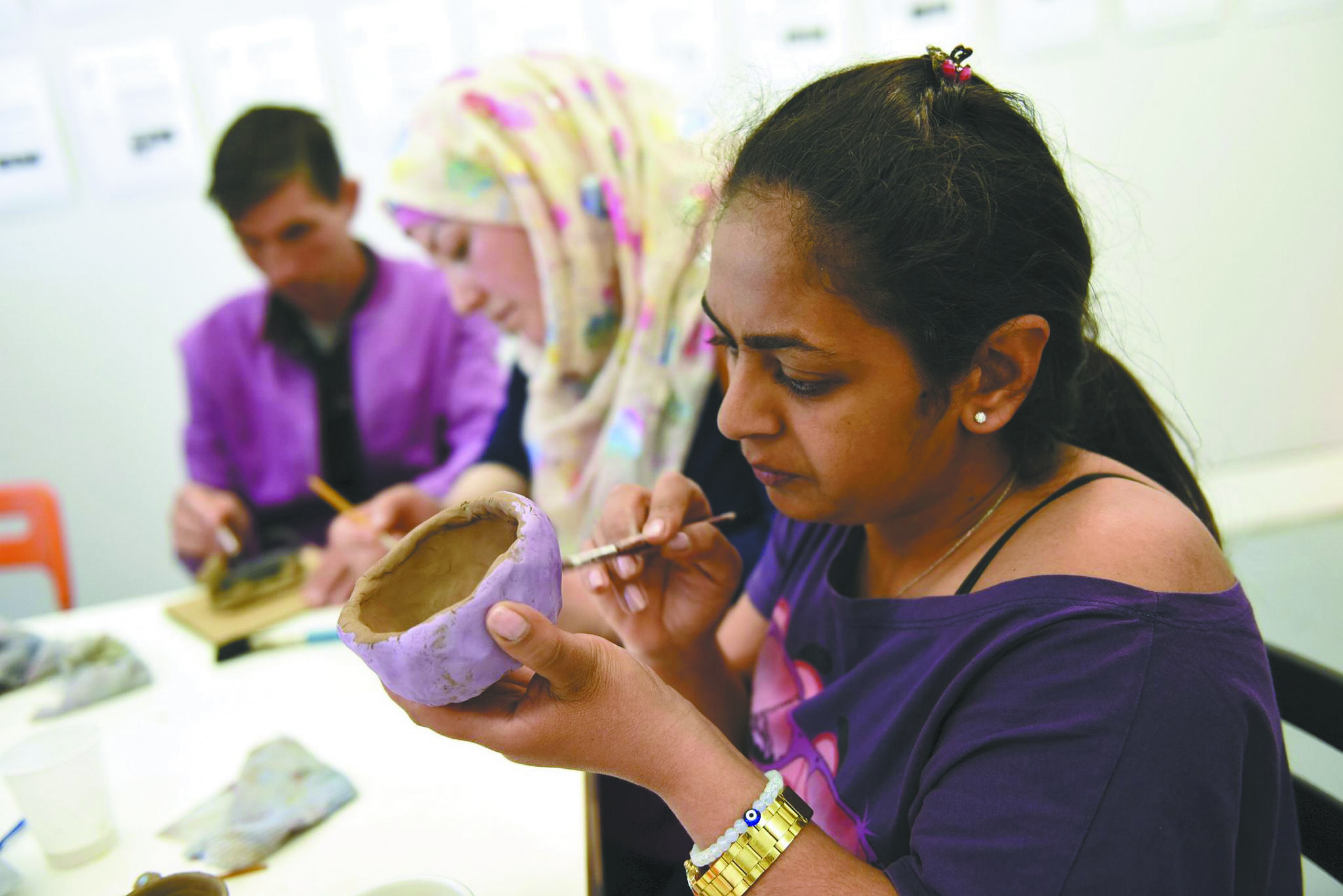
In 2014, Alistair Hudson was appointed director of Middlesbrough Institute of Modern Art (mima), part of Teesside University. From 2004 to 2014, Alistair was deputy director of Grizedale Arts – a contemporary arts residency and commissioning agency in the central Lake District in rural Northern England. In keeping with the principles of Arte Útil, mima describes itself as a ‘useful’ museum, established through ‘usership’ rather than spectatorship.
PDF Art Monthly Dec-Jan 2016-17
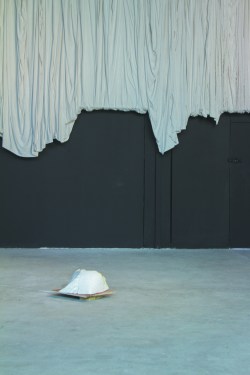
It is not often that an exhibition confronts audiences with propositions to become headless. Pitched as a container, diagnosis and provocation, ‘The Headless City’ curated by Daniel Jewesbury invited viewers to step outside their rationale and to make demands for public space in imagining a future for our cities. Based in Galway in the west of Ireland, TULCA commissions an Irish-based curator each year to develop a thematic inquiry. The festival, which is delivered on a comparatively small budget, has grown in scope and ambition in recent years.

PDF Towards a Post-patriarchal State’
Towards a Post-patriarchal State
JOANNE LAWS INTERVIEWS SARAH BROWNE AND JESSE JONES ABOUT THEIR PROJECT ‘IN THE SHADOW OF THE STATE’.
2016: The Proximity of History
We work exceptionally hard in the arts. Whether working day in, day out, in studios, traveling the length and breadth of the country, grant-chasing, freelancing or maintaining real jobs at the fringes of day jobs, we move mountains every day. While critical reflection is an inbuilt methodology of what we do, how often do we actually pause to reflect on our progress or marvel at our achievements? As the final Visual Artists’ News Sheet of the year, this issue is positioned to consider recent developments across our sector, while assessing some of the challenges that remain.
For every natural language is its own meta-language
Jürgen Habermas (1986) [i]
As well as groundbreaking theorisations on the ‘public sphere’, German sociologist and philosopher Jürgen Habermas is probably best known for his contributions to the field of Social Theory through his reasoning on Communicative Rationality – a set of theories focusing on human interaction and discourse that posits the sphere of language as the site of moral consciousness.
 Joanne Laws